
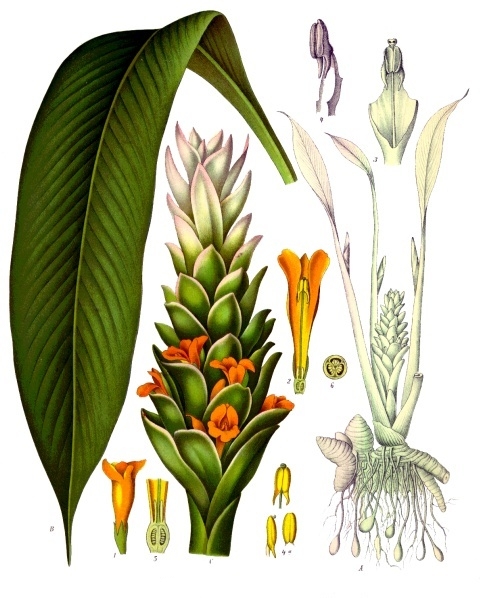
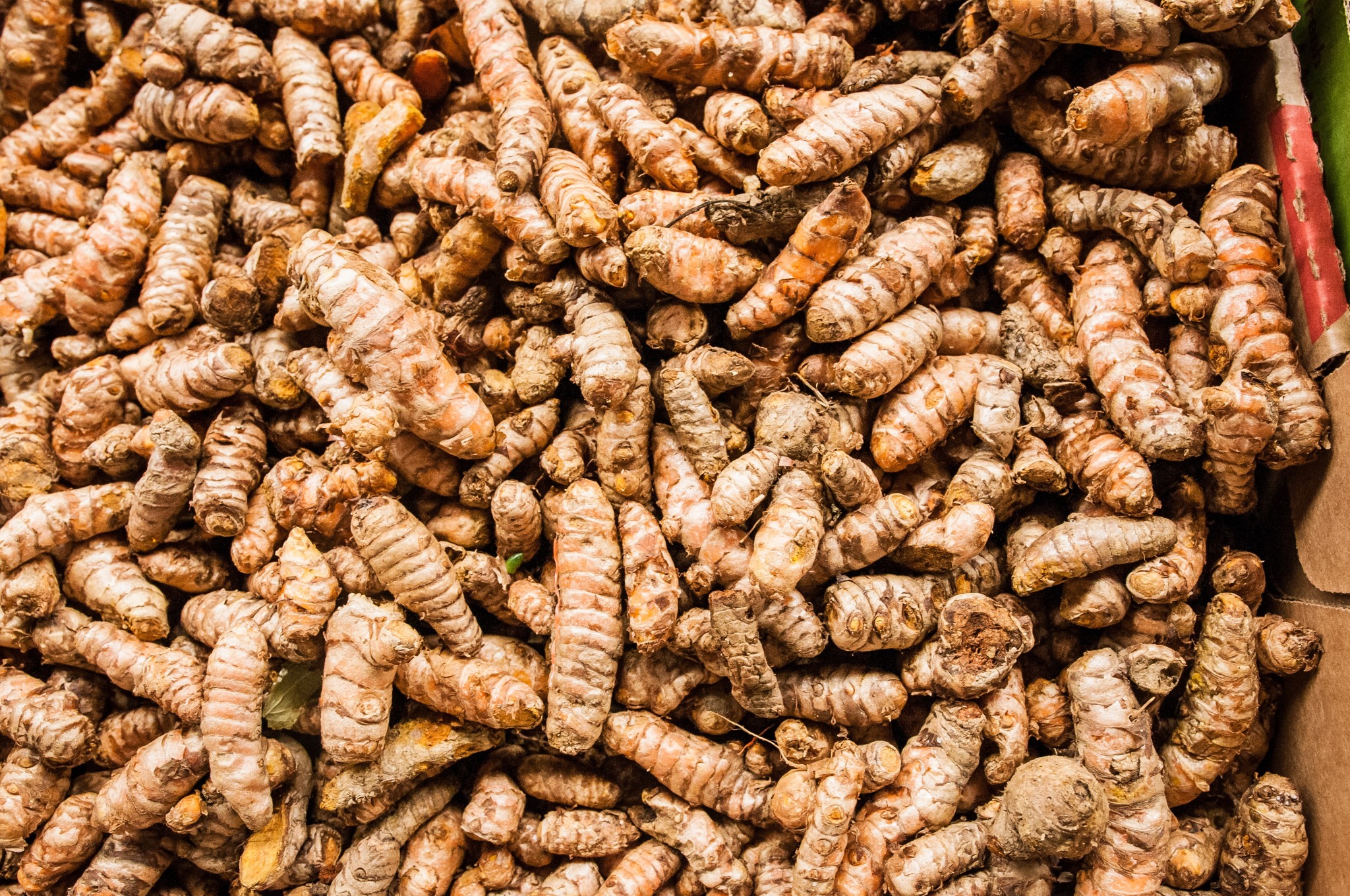
Taste
Plant Parts Used
Therapeutic Properties
Alterative, Anti-inflammatory, Antibacterial, Antibiotic, Aphrodisiac, Carminative, Demulcent, Expectorant, Hemostatic, Nutritive tonic, Rejuvenative & Tonic
Ayurvedic Character
Heating
Current Uses
Turmeric is one of those plants that’s managed to transcend its spice rack beginnings and become a global superstar — and for good reason. Today, you’ll find it in everything from golden lattes and wellness shots to high-end bitters and botanical liqueurs. Its vivid saffron-orange hue makes it a natural coloring agent, but bartenders and distillers value it just as much for the earthy depth and subtle heat it lends to cocktails. A touch of turmeric can lend structure and bitterness to amari, deepen the backbone of a gin or vermouth, or even infuse a simple syrup with a grounding warmth that complements citrus, ginger, and honey.
Beyond the bar, turmeric still holds court in herbalism and functional beverages. Modern research supports many of its traditional uses — most notably its ability to support digestion, soothe inflammation, and bolster the liver — and it’s increasingly found in aperitif-style spirits and nonalcoholic amaros aimed at the health-conscious crowd. A little goes a long way: its bitterness is subtle, its aroma unmistakable, and its golden glow instantly recognizable.
Culinary. Rhizomes are boiled, peeled, dried and powdered. Dye.
Precautions
Turmeric is generally safe in culinary and beverage quantities, but concentrated extracts can thin the blood and should be used cautiously if you’re on anticoagulants. It may also stimulate bile flow, so those with gallstones or bile duct obstructions should consult a professional before heavy use.
Substitutions
If turmeric isn’t available, saffron can replicate its color (though not its flavor), while galangal or ginger can offer similar spicy warmth. For bitters and tinctures, a combination of yellow dock and gentian can mimic some of its digestive qualities without altering the drink’s profile too dramatically.
History
Turmeric’s story begins more than 4,000 years ago in the Indian subcontinent, where it was revered as a sacred plant, a powerful medicine, and a vibrant dye. In Ayurveda, it was described as a pitta-pacifying herb, used to “kindle agni” — the digestive fire — and to purify the blood, tone the liver, and balance the mind. Across Southeast Asia, it became a cornerstone of both cuisine and ritual, coloring temple offerings and bridal adornments as much as it did curries and chutneys.
Arab traders carried turmeric westward along the spice routes, and by the Middle Ages it was a prized commodity in Europe, sometimes called “Indian saffron.” Physicians like Dioscorides and Avicenna noted its warming, carminative properties, and by the 18th century, it had made its way into Western pharmacopeias as a hepatic tonic and digestive stimulant. Today, its ancient legacy lives on not just in kitchens and clinics, but increasingly in bars, where turmeric’s golden bitterness connects millennia of tradition to the modern palate.
Footnotes
- Aggarwal, Bharat B., et al. “Curcumin: The Indian Solid Gold.” Advances in Experimental Medicine and Biology, vol. 595, 2007, pp. 1–75.
- Srinivasan, K. “Turmeric: The Golden Spice of Life.” Culinary Herbs and Spices of the World, CRC Press, 2014.
- Mukherjee, Pulok K. Quality Control and Evaluation of Herbal Drugs. Elsevier, 2019.
- Weiss, Rudolf F., and Volker Fintelmann. Herbal Medicine. Thieme, 2000.
- The Yoga of Herbs, p. 150, The Complete Book of Herbs and Spices, Sarah Garland, 1979
Photo by: fotopedia