
Taste
Plant Parts Used
Therapeutic Properties
Adaptogen, Antibacterial, Antiseptic, Antispasmodic, Carminative, Diaphoretic, Expectorant, Febrifuge, Nervine, Rejuvenative, Stimulant & Tonic
Ayurvedic Character
Heating
Current Uses
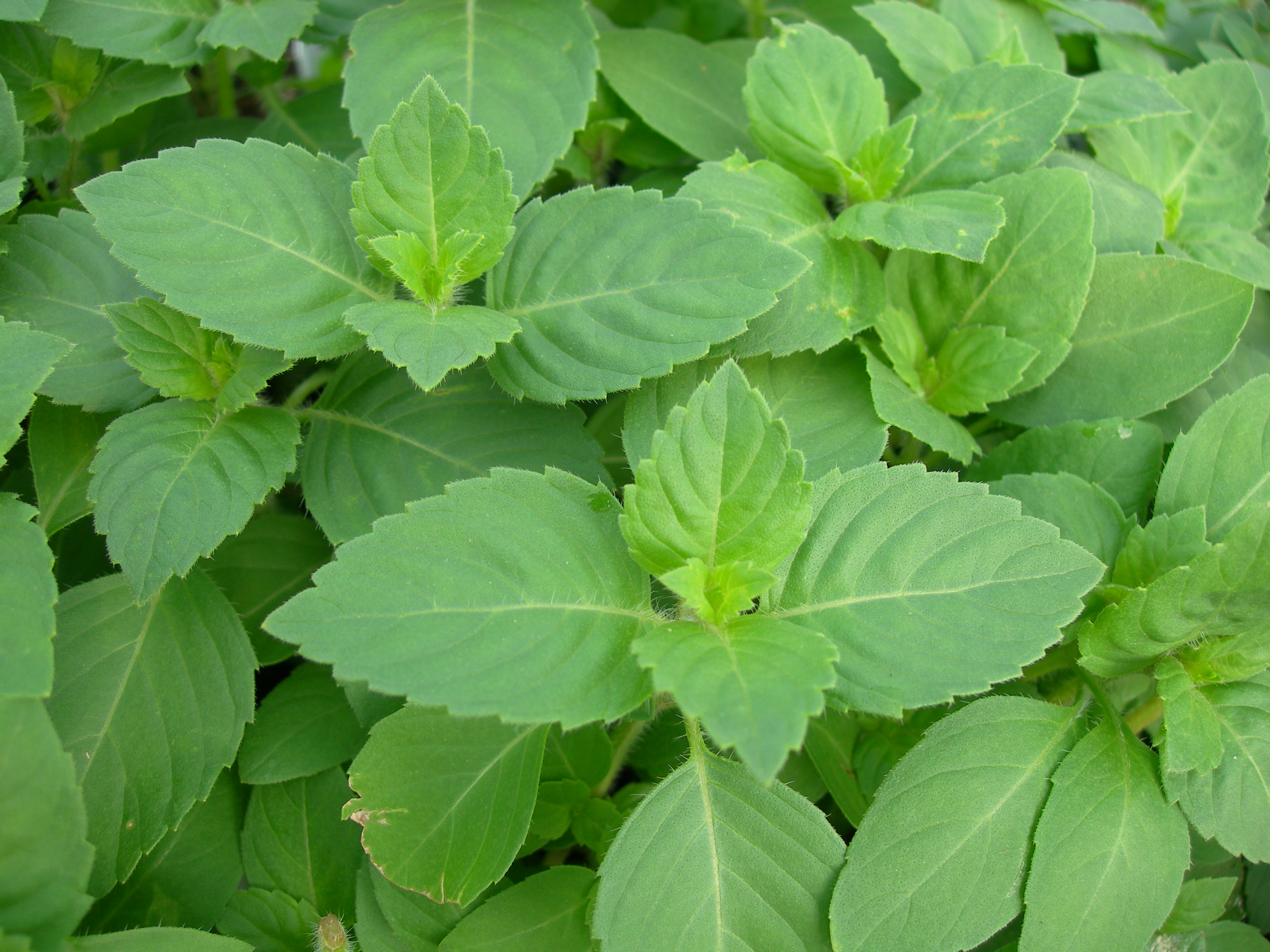
If common basil is the herb of the kitchen, tulsi is the herb of the temple. Revered across India as “The Incomparable One,” holy basil bridges the spiritual and the medicinal—it’s burned in ritual, brewed as tea, and now finding its way into botanical beverages for its warming spice and serene, almost sacred aroma. In cocktails, tulsi lends a clove-and-camphor complexity that plays beautifully with gin, rum, or amaro bases. It deepens bitter formulations, adds gravitas to herbal cordials, and pairs seamlessly with citrus, ginger, and honey syrups.
In wellness circles, tulsi has become a star adaptogen. It’s used to steady the nerves, ease digestion, and balance the body’s stress response. Behind the bar, that translates to an herb that not only tastes remarkable but also “feels good” in a drink—both grounding and enlivening. A few tulsi leaves in an infusion or syrup can turn a simple highball into something with genuine soul.
Precautions
Tulsi is considered safe for most people when consumed as a tea or culinary herb. It may, however, slightly thin the blood and affect blood sugar regulation1. Those on anticoagulants, antidiabetic medications, or preparing for surgery should exercise caution. Avoid use during pregnancy in large medicinal doses, as traditional sources note its stimulating nature.
Can lower fertility, use with caution.
Substitutions
If tulsi isn’t available, you can substitute sweet basil for freshness, though it lacks tulsi’s spicy depth. Clove basil (Ocimum gratissimum) or Thai basil (Ocimum basilicum var. thyrsiflora) come closer in aroma, especially for spiced bitters or amari applications.
History
Holy basil has been cultivated for over 3,000 years in India, where it’s entwined with daily life, medicine, and devotion. In Hindu households, tulsi is planted at the doorstep as a living symbol of protection and purity. Ancient Ayurvedic texts—such as the Charaka Samhita (ca. 1000 BCE)—describe it as an herb that opens the heart and clears the mind, used to dispel melancholy and strengthen prana, the life force2.
European botanists first described tulsi in the 16th century, confusing it at first with common basil due to its similar leaf structure. In time, its distinctive aroma and spiritual reputation set it apart. By the 20th century, Western herbalists recognized it as a potent adaptogen, likening its effects to ginseng or ashwagandha. Today, tulsi occupies a rare dual space—simultaneously sacred and practical—bridging ancient Ayurvedic wisdom and modern mixology in equal measure.
The plant is highly revered in India and is dedicated to the god Vishnu. The Sanskrit word Tulsi means “the incomparable one” in reference to Siva.
Footnotes
-
Cohen, Marc Maurice. “Tulsi—Ocimum sanctum: A Herb for All Reasons.” Journal of Ayurveda and Integrative Medicine, vol. 5, no. 4, 2014, pp. 251–259. ↩ ↩2 ↩3 ↩4
-
Prakash, Parag, and Neelu Gupta. “Therapeutic Uses of Ocimum sanctum Linn (Tulsi) with a Note on Eugenol and Its Pharmacological Actions: A Short Review.” Indian Journal of Physiology and Pharmacology, vol. 49, no. 2, 2005, pp. 125–131. ↩ ↩2 ↩3 ↩4
-
Grieve, Maud. A Modern Herbal. Dover Publications, 1971. ↩ ↩2
-
Pandey, G., et al. “Pharmacological and Therapeutic Effects of Ocimum sanctum Linn. (Tulsi): A Review.” International Journal of Pharmaceutical Sciences Review and Research, vol. 31, no. 1, 2015, pp. 172–180. ↩ ↩2 ↩3
-
Kapoor, L. D. Handbook of Ayurvedic Medicinal Plants: Herbal Reference Library. CRC Press, 2000. ↩ ↩2
-
Lad, Vasant. Ayurveda: The Science of Self-Healing. Lotus Press, 1984. ↩ ↩2 ↩3
-
Dash, Bhagwan, and Sharma, R. K. Charaka Samhita: Text with English Translation and Critical Exposition Based on Chakrapani Datta’s Ayurveda Dipika. Chowkhamba Sanskrit Series, 1994. ↩ ↩2 ↩3 ↩4
-
Winston, David, and Steven Maimes. Adaptogens: Herbs for Strength, Stamina, and Stress Relief. Healing Arts Press, 2007. ↩ ↩2 ↩3 ↩4