
Taste
Plant Parts Used
Therapeutic Properties
Ayurvedic Character
Heating
Current Uses
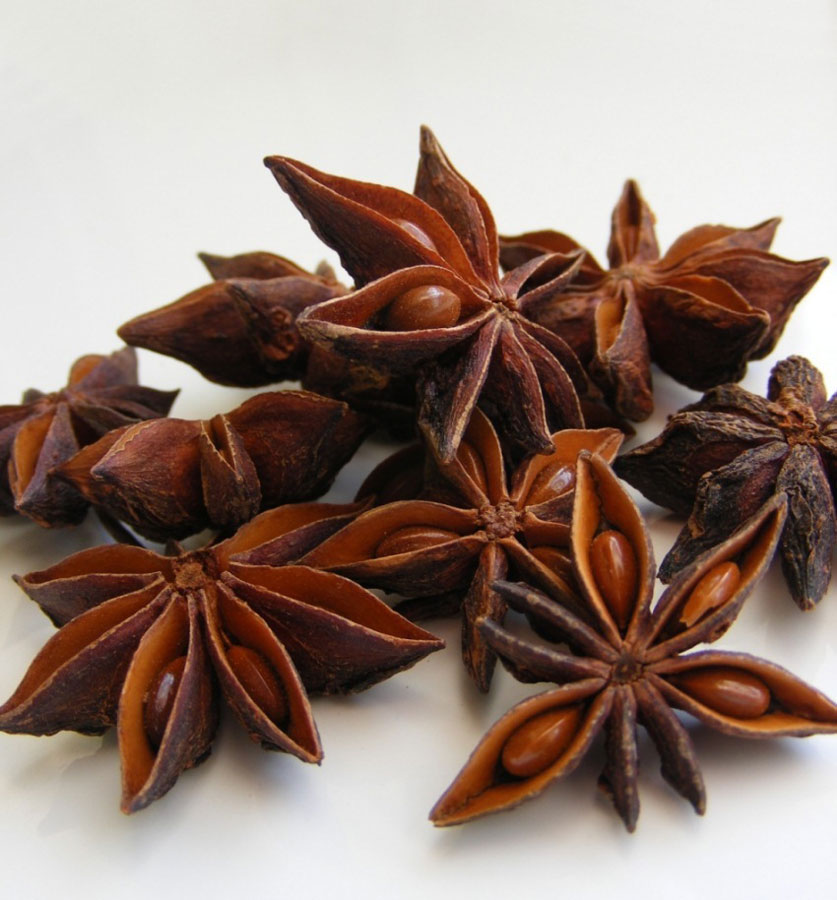
If you work behind a bar, star anise is one of those botanicals that easily elevates a drink by quietly becoming an exotic garnish, floating on the top of a holiday drink. But its incorporation into spirits themselves also does a lot of heavy lifting. Its intensely aromatic, licorice-like flavor makes it a natural fit for bitters and spiced liqueurs. You’ll most often encounter it in anise-forward liqueurs such as pastis, sambuca, and various herbal digestifs. A single pod can transform a spirit infusion, delivering sweetness, warmth, and a distinctive aromatic lift that lingers on the palate.
In the kitchen and apothecary, star anise also shows up in teas, syrups, and spice blends. Herbalists traditionally value it as a digestive aid and carminative, meaning it helps relax the gastrointestinal tract and reduce gas or bloating after meals. That reputation explains why it frequently appears in after-dinner liqueurs and digestifs. In short, if you’re building a bitter, aromatic, or warming profile in a spirit, star anise gives you a powerful and recognizable backbone.
Precautions
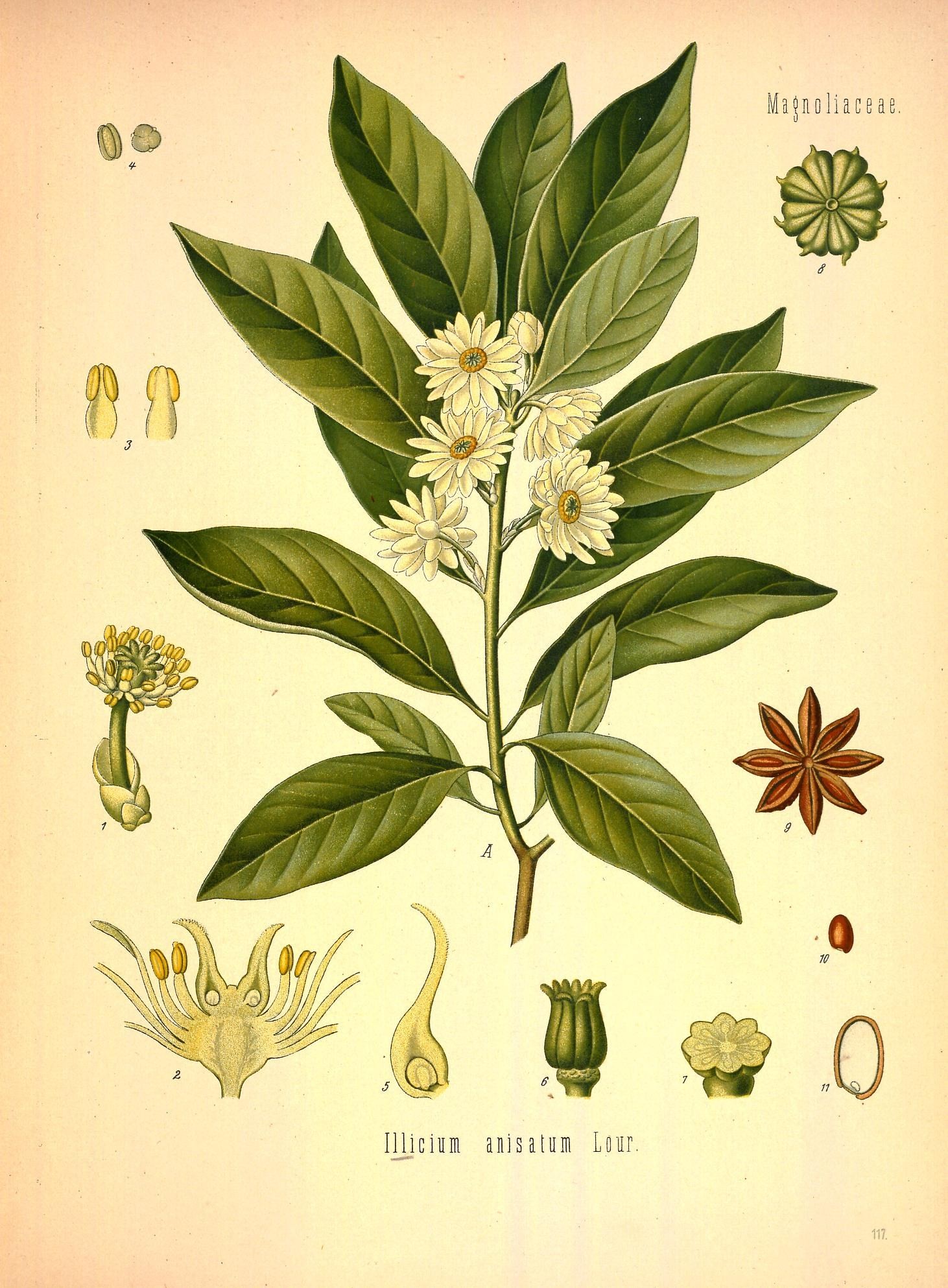
Star anise used in culinary and beverage applications is generally safe in moderate amounts. However, it is important to distinguish Chinese star anise (Illicium verum) from Japanese star anise (Illicium anisatum), which is toxic and not suitable for consumption.
In herbal medicine, large medicinal doses are typically avoided during pregnancy due to potential estrogenic activity. As with most strongly aromatic botanicals, concentrated extracts or essential oils should be used carefully and in small quantities.
Substitutions
If you find yourself out of star anise, a few botanicals can approximate its flavor profile, though none replicate its exact aromatic complexity.
Anise seed is the closest substitute and delivers a similar sweet licorice character. Fennel seed works well in bitters or syrups when you want a softer, greener anise note. Licorice root can provide sweetness and depth but lacks the bright aromatic lift of star anise. In cocktails or infusions, a combination of fennel seed and a small amount of licorice root often produces the closest approximation.
History
Origins
Star anise has been part of Asian culinary and medicinal traditions for centuries. Native to southern China and northern Vietnam, the spice appears in Chinese materia medica texts as a warming digestive aid and aromatic stimulant. It was commonly used to flavor teas and broths, and it eventually became a defining component of Chinese five-spice powder.¹
European traders encountered star anise through maritime trade in the 16th and 17th centuries, when the spice began arriving in Europe via Spanish and Portuguese shipping routes. By the 18th century, it was widely used in European baking and liqueur production. Its strong resemblance in flavor to anise seed made it especially appealing to distillers, who incorporated it into anise-flavored spirits and herbal liqueurs throughout the Mediterranean and beyond.²
Footnotes
-
Duke, James A. Handbook of Medicinal Herbs. 2nd ed., CRC Press, 2002.
-
McGee, Harold. On Food and Cooking: The Science and Lore of the Kitchen. Scribner, 2004.