
Taste
Plant Parts Used
Therapeutic Properties
Ayurvedic Character
Cooling
Current Uses
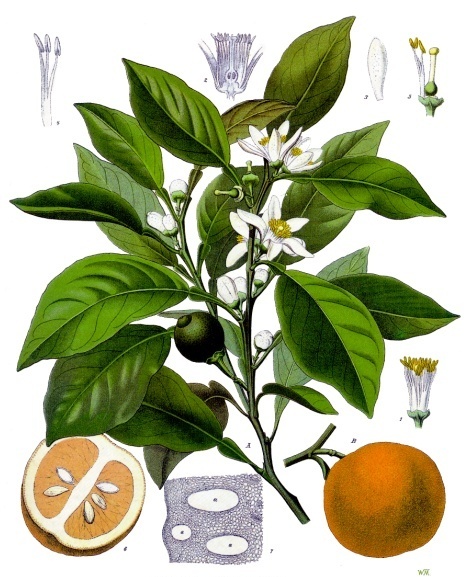
If you’ve ever wondered where the bright, bitter citrus note in many classic liqueurs comes from, you’re probably tasting Seville orange. Known botanically as Citrus × aurantium, this fruit is prized by distillers and bartenders for its intensely aromatic peel and assertive bitterness. The zest delivers a sharp citrus fragrance layered with floral and slightly resinous notes, which makes it ideal for bitters, amari, curaçaos, and aperitifs. You’ll often encounter it as dried peel in bitter liqueurs or tinctures where it adds brightness and structure to heavier botanicals like gentian, cinchona, or angelica.
Behind the bar, Seville orange is most useful when you want citrus complexity without sweetness. Fresh juice is extremely tart and bitter, so it rarely appears in cocktails the way lemon or sweet orange does. Instead, bartenders lean on the peel—fresh or dried—for tinctures, syrups, and infusions. Even a small amount can sharpen a cocktail’s aroma and help knit together bitter, herbal, and spice-driven formulas. It is also the defining citrus in traditional orange marmalade, which occasionally finds its way into modern cocktail programs as a bitter-sweet modifier.
Myrtifolia is sometimes considered a separate species, Citrus myrtifolia, the myrtle-leaved orange. The ‘Chinotto’ cultivar is used to make the Italian soda beverage also called Chinotto.
Plant Life Cycle
Hardiness Zone
Used in Spirits
Precautions
Seville orange peel contains compounds that may interact with certain medications, particularly those metabolized through liver enzymes related to cytochrome P450 pathways. While the effect is generally weaker than that associated with Citrus × paradisi, caution is still advisable for individuals taking medications affected by citrus bioactive compounds.
Extracts of bitter orange sometimes contain synephrine, a naturally occurring alkaloid with mild stimulant properties. Concentrated supplements containing bitter orange extract have been associated with elevated blood pressure and cardiovascular stress in sensitive individuals. Culinary and beverage quantities, however, are generally considered safe.
Substitutions
If you cannot source Seville orange, you have several workable substitutes depending on what role it plays in the recipe.
Bitter orange peel (dried), commonly sold for herbal or cocktail use, is the closest equivalent and often comes from the same species.
A blend of sweet orange peel and grapefruit peel can approximate its aroma and bitterness.
Fresh sour orange juice from Caribbean markets can stand in for the fruit itself.
In a pinch, a mixture of orange zest and a small amount of lemon zest will replicate the aromatic brightness, though it will lack some bitterness.
History
Origins
Seville orange likely arose through ancient hybridization between the pomelo and mandarin somewhere in Southeast Asia before spreading westward along early trade routes. By the early medieval period it had reached the Mediterranean, where it became one of the first citrus fruits widely cultivated in Europe. Long before sweet oranges became common, bitter orange trees were prized for their fragrance, ornamental beauty, and medicinal value.¹
In Spain, the city of Seville became famous for its vast plantings of the trees, which still perfume the streets each spring with intensely fragrant blossoms. The fruit itself was rarely eaten fresh but became important in preserves, sauces, and liqueurs. Distillers eventually recognized that the peel’s bitter oils paired beautifully with alcohol, helping establish bitter orange as a foundational botanical in European liqueur traditions and early cocktail bitters.²
Footnotes
-
Giovanni Dugo and Angelo Di Giacomo, eds. Citrus: The Genus Citrus. London: Taylor & Francis, 2002.
-
David Mabberley. Citrus: A World History. London: Thames & Hudson, 2018.