
Taste
Plant Parts Used
Therapeutic Properties
Ayurvedic Character
Cooling
Current Uses
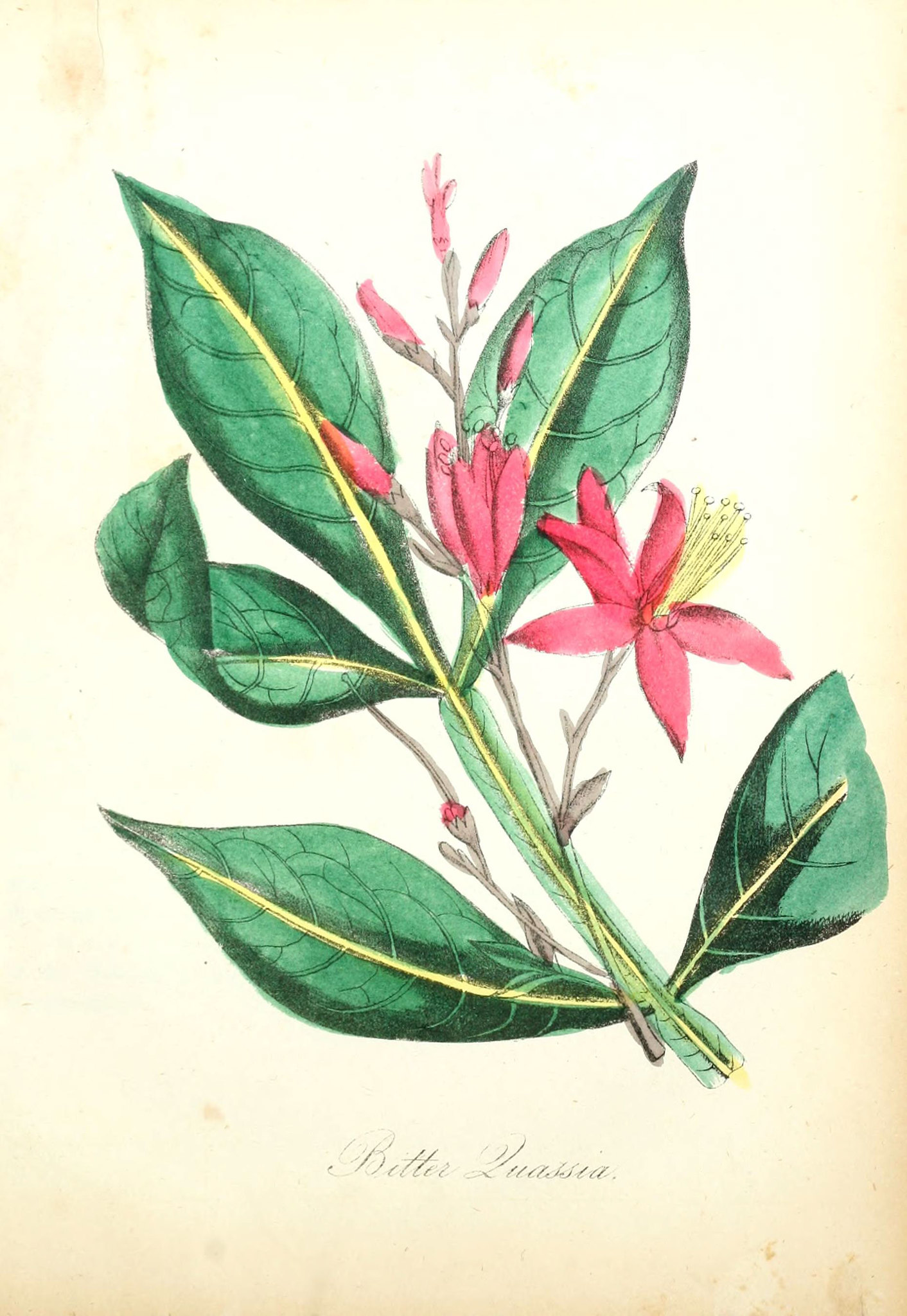
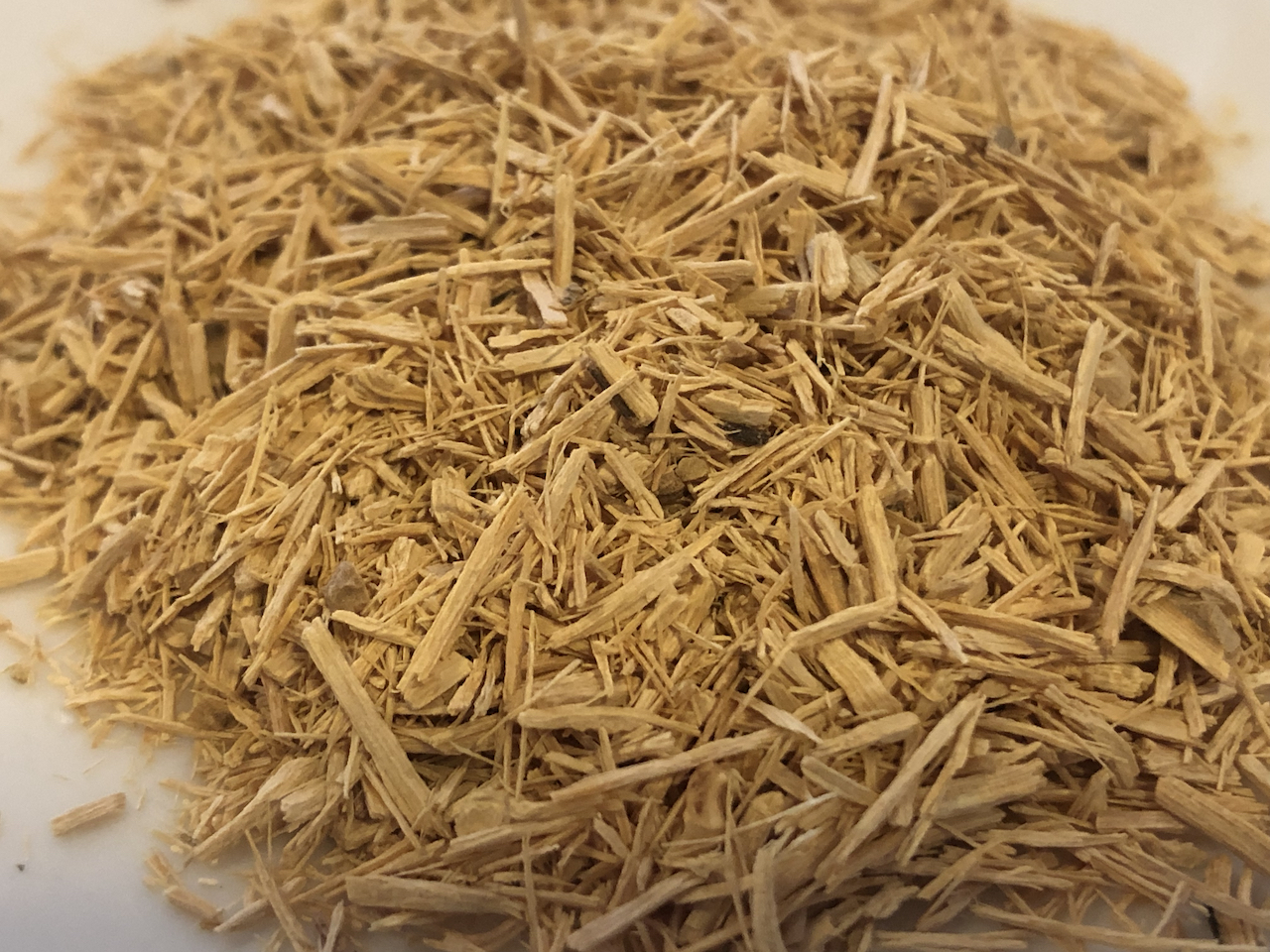
If you work behind a bar and want to understand bitterness at its purest, quassia is your calibration tool. Derived primarily from the wood of Quassia amara or Picrasma excelsa, quassia is used in minute quantities to deliver a clean, penetrating bitter note without strong aromatic interference. It shows up in classic-style cocktail bitters, aperitifs, and some amari where structure matters more than perfume. You will not taste florals or citrus oils here. You will taste bitterness, precise and unflinching, which makes it invaluable when you are building balance into a formula that risks tipping sweet.
Beyond beverages, quassia has long been used in herbal practice as a digestive bitter. Its intensely bitter quassinoids stimulate gastric secretions and appetite through a reflex action triggered on the tongue, a mechanism well documented in pharmacognosy literature. In modern food and beverage production, quassia extracts are also used as bittering agents in soft drinks and occasionally in brewing, though hops largely dominate that arena. For your purposes, think of quassia as architectural bitterness: it gives spine without adding distracting flavor.
Precautions
Quassia is extremely potent. Overuse results in an unpleasantly sharp bitterness that can render a product undrinkable. In herbal contexts, high doses may irritate the gastric mucosa and are not recommended for individuals with active ulcers or significant gastrointestinal inflammation. Traditional sources caution against use during pregnancy due to its strong physiological activity. As with all concentrated bitters, dosing matters; this is a plant where milligrams, not grams, make the difference between elegance and excess.
Substitutions
If quassia is unavailable, gentian root is your closest functional substitute in bitters production, though it brings a more earthy, rooty profile. Calamus root offers bitterness but introduces aromatic spice. Wormwood delivers firm bitterness but adds assertive herbal aromatics and thujone considerations. None are as neutral and laser-focused as quassia, so expect to adjust your ratios and possibly your sweetening agents to maintain balance.
History
Origins
Quassia’s story begins in northern South America and the Caribbean. The plant is named after Quassi (also spelled Kwasi), an Afro-Surinamese healer in the eighteenth century who introduced its medicinal applications to European colonists. From there, the wood entered European materia medica as a powerful stomachic bitter and febrifuge. By the late eighteenth century, it was well established in British and continental pharmacopoeias.
In Jamaica, Picrasma excelsa became an important export under the name “Jamaica quassia,” supplying European demand for bitter tonics. Physicians of the eighteenth and nineteenth centuries prescribed it to stimulate appetite and improve digestion, consistent with the prevailing understanding of bitter tonics as agents that strengthened the stomach through sensory stimulation. Its reputation as one of the purest bitters persists today in both herbalism and beverage formulation.
Footnotes
-
Woodville, William. Medical Botany; Containing Systematic and General Descriptions, with Plates, of All the Medicinal Plants. Vol. 3, James Phillips, 1793.
-
Bentley, Robert, and Henry Trimen. Medicinal Plants: Being Descriptions with Original Figures of the Principal Plants Employed in Medicine. Vol. 1, J. & A. Churchill, 1880.
-
Bruneton, Jean. Pharmacognosy, Phytochemistry, Medicinal Plants. 2nd ed., Lavoisier Publishing, 1999.