
Taste
Plant Parts Used
Therapeutic Properties
Ayurvedic Character
Heating
Current Uses
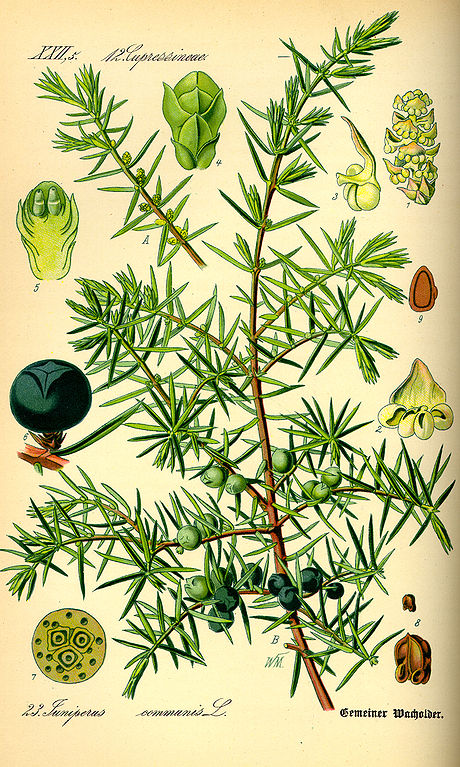
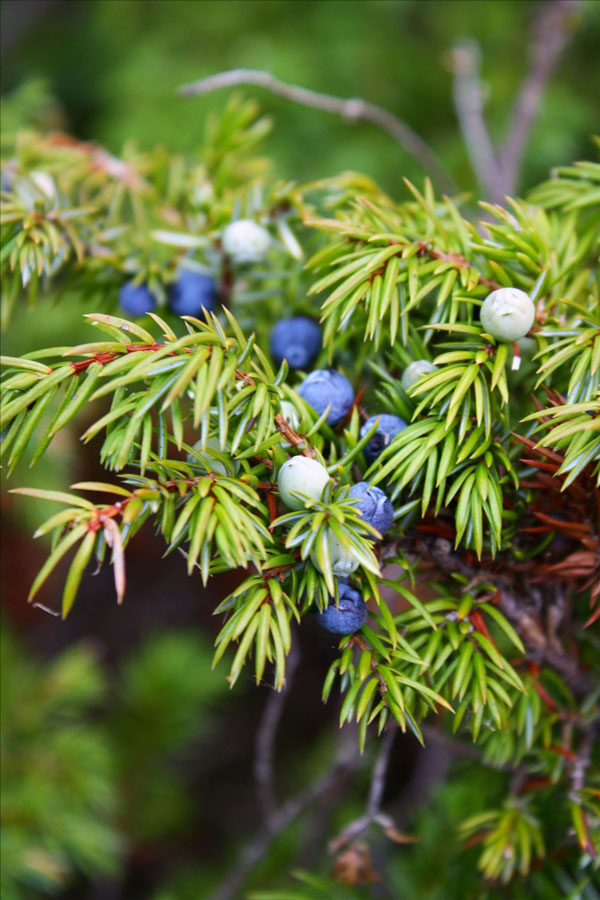
Juniper is best known for its berries (technically seed cones) — those tiny blue-black spheres that make gin what it is. Beyond spirits, bartenders and culinary wizards squeeze them into bitters, shrubs, and savory syrups because they bring a pine-fresh, resinous punch that brightens and balances rich flavors.
In your world, juniper is architecture. Without it, gin simply does not exist. EU and U.S. regulations both require juniper to be the dominant flavor in gin, which means every London Dry, New Western, Old Tom, Navy Strength, and contemporary craft expression is built around its resinous spine. In a London Dry, juniper is sharp, pine-forward, dry, and bracing. In a New Western style, it’s often dialed back, allowing citrus, floral, or spice botanicals to share the spotlight, but the backbone remains unmistakably coniferous.
Taste juniper across spirits and you’ll notice stylistic shifts. Dutch jenever leans maltier and softer, with juniper expressing as earthy forest floor and subtle evergreen rather than high-toned pine. Slovak borovička pushes the berry hard — intensely resinous, almost terpene-driven. In Nordic farmhouse ale like Finnish sahti, juniper twigs lend green, sappy bitterness and woodsy aromatics rather than the concentrated berry note you know from gin. Beyond spirits, bartenders crush berries into syrups, infuse them into vermouth, tincture them into bitters, and use them in savory cocktail applications alongside game, citrus, and dark honey. Used well, juniper tastes like walking through cold mountain air: pine needles, crushed black pepper, faint citrus peel, a whisper of camphor, and dry woodland earth.
Precautions
While juniper berries are generally safe in small amounts (like in gin), therapeutic doses or essential oils should be used with caution. They’re not recommended during pregnancy because of traditional concerns about uterine stimulation. There’s also a risk of kidney irritation with high or prolonged use, especially in individuals with renal disease, and interactions with diuretics and certain medications. Always consult a healthcare provider for medicinal use.
Substitutions
If you’re looking for juniper’s pine-y, resinous note without actual berries, consider using rosemary, pine needles, or spruce tips in moderation — they mimic the coniferous character in cocktails and bitters. For digestive support in herbal blends, angelica root, dandelion root, or gentian (classic bittering agents) can stand in for juniper’s stomachic quality.
History
Origins
Juniper’s story is baked into human culture across the Northern Hemisphere. It appears in Egyptian papyri dating back to 1500 B.C.E., where the berries were noted for medicinal use, and in European folk medicine for digestive and urinary issues for centuries.
Gin’s very name comes from the French and Dutch words for juniper, and botanical remains suggest juniper-flavored beers were brewed in medieval Europe long before distilled spirits became widespread. Juniper also figures in indigenous traditions — from cleansing rituals to medicinal teas — underscoring its deep ethnobotanical roots.
Branches were burned in hospitals to fight against pestilence and during the smallpox epidemic of the 19c.
Footnotes
-
“Juniperus communis.” Artemis Herbal Remedies Database, herbs.artemis-temple.com/monographs/juniperus-communis/.
-
“Juniperus communis.” Wikipedia, last edited 2025, en.wikipedia.org/wiki/Juniperus_communis.
-
“Juniper Berries.” The Herb Society of America, herbsociety.org/file_download/inline/5702f152-8964-4bb7-b413-3b406e66547c.
-
“Juniper: Juniperus Communis.” TCD History of Pharmacology, www.tcdhistoryofpharmacology.com/juniper-berries.
Photo by: fotopedia