
Taste
Plant Parts Used
Therapeutic Properties
Ayurvedic Character
Heating
Current Uses
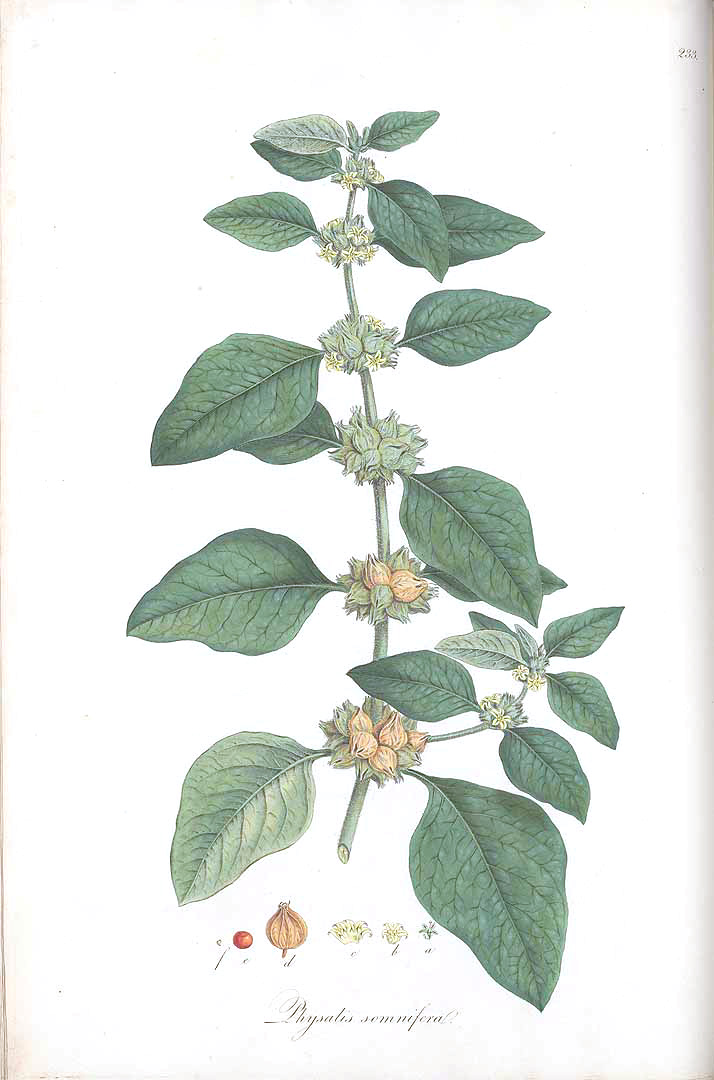
Sattvic herb with strong energy. Ashwagandha is as revered in Ayurvedic therapeutics as ginseng is in Chinese medicine. An extract of the root is used in Ayurvedic treatment for chronic fatigue. The leaves and berries can be applied topically in a poultice to treat tumors and ulcers in the skin. One of the herbs prescribed in Rasayana treatment for Vata. The powdered root can be boiled with milk and water into a decoction. Used in medicated oils and ghee.
If you spend any time in wellness circles, you’ve probably heard about ashwagandha. Its name shows up in everything from mushroom coffee blends to nootropic tinctures — and now, it’s starting to creep into bar programs too. That’s because ashwagandha isn’t just a buzzword; it’s an adaptogen, a class of herbs said to help your body adapt to stress and restore balance. Modern herbalists often use it to steady frazzled nerves, support restful sleep, and build stamina — qualities that can make it a thoughtful addition to a restorative liqueur, calming aperitivo, or low-ABV nightcap.¹
In the glass, ashwagandha brings a subtle earthiness, sometimes compared to hay or warm soil, with a gentle bitterness that plays well against warming spices or malty base spirits. You’re unlikely to find it as a star botanical in classic amari, but innovative producers and bartenders have begun experimenting with its grounding, slightly bitter root as a bridge between sweeter botanicals and more assertive bittering agents. Think of it as a soft anchor — a way to layer depth, not dominate the palate.
Precautions
Ashwagandha is generally considered safe in moderate amounts, but large doses can cause stomach upset or drowsiness.² It may also interact with sedatives, thyroid medications, or immunosuppressants, so anyone on such treatments should check with a healthcare professional before use. Because it may stimulate uterine activity, it’s traditionally avoided during pregnancy.³
Do not use if severely congested or there is high Ama in the body.
Substitutions
If you can’t source ashwagandha, try eleuthero (Eleutherococcus senticosus, often called Siberian ginseng) or American ginseng (Panax quinquefolius). Both share its adaptogenic qualities and bring a similarly earthy, rooty profile. For flavor purposes alone, a light touch of angelica root can mimic some of its grounding depth.
History
Origins
Ashwagandha has been a cornerstone of Ayurvedic medicine for over 3,000 years. Its Sanskrit name translates to “smell of a horse,” referring both to its distinctive aroma and the belief that it imparts the strength and vitality of a stallion.⁴ Ancient physicians like Charaka and Sushruta praised it as a rasayana — a rejuvenating tonic used to boost longevity, resilience, and sexual vitality.⁵ In traditional practice, it was often prescribed to kings, scholars, and warriors alike to sharpen the mind, fortify the body, and temper anxiety.
By the time European explorers encountered it, ashwagandha was already deeply woven into South Asian healing traditions. British colonial physicians in the 19th century described it as “Indian ginseng,” comparing its tonic qualities to Asian varieties.⁶ Today, it’s one of the best-studied adaptogens in herbal pharmacology — bridging ancient ritual with modern wellness trends — and is slowly finding a new role behind the bar, adding a layer of history and intention to botanical blends.
Footnotes
-
Singh, N., et al. “An Overview on Ashwagandha: A Rasayana (Rejuvenator) of Ayurveda.” African Journal of Traditional, Complementary and Alternative Medicines, vol. 8, no. 5S, 2011, pp. 208–213.
-
Tandon, N., and Yadav, S. S. “Contributions of Indian Council of Medical Research (ICMR) in the area of medicinal plants.” Journal of Ethnopharmacology, vol. 197, 2017, pp. 39–45.
-
Bone, K., and Mills, S. Principles and Practice of Phytotherapy: Modern Herbal Medicine. 2nd ed., Elsevier, 2013.
-
Dash, B. Materia Medica of Ayurveda. B. Jain Publishers, 2001.
-
Pole, S. Ayurvedic Medicine: The Principles of Traditional Practice. Churchill Livingstone, 2006.
-
Dymock, W., et al. Pharmacographia Indica: A History of the Principal Drugs of Vegetable Origin Met with in British India. Kegan Paul, Trench, Trübner & Co., 1890.
-
Chandrasekhar, K., et al. “A Prospective, Randomized Double-Blind, Placebo-Controlled Study of Safety and Efficacy of a High-Concentration Full-Spectrum Extract of Ashwagandha Root in Reducing Stress and Anxiety in Adults.” Indian Journal of Psychological Medicine, vol. 34, no. 3, 2012, pp. 255–262.
-
Wankhede, S., et al. “Examining the Effect of Withania somnifera Supplementation on Muscle Strength and Recovery.” Journal of the International Society of Sports Nutrition, vol. 12, no. 1, 2015, p. 43.