
Taste
Plant Parts Used
Therapeutic Properties
Ayurvedic Character
Cooling
Current Uses
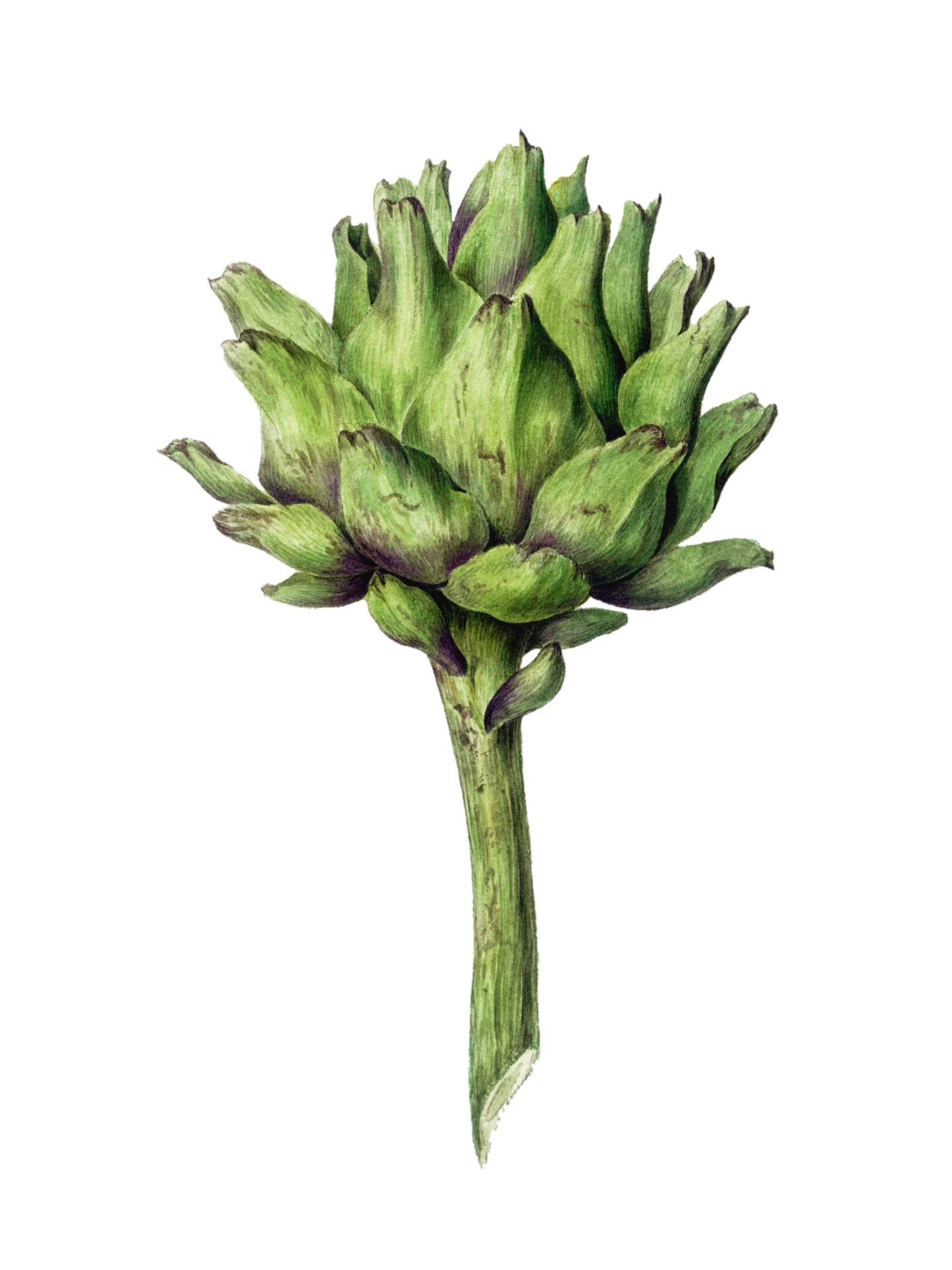
The globe artichoke is a thistle with an almost architectural design—tight clusters of bracts wrapped around a tender heart that’s been prized in kitchens for centuries. You’ve probably enjoyed it steamed, grilled, or tucked into a rich dip, but its story goes far beyond the plate.
Artichoke’s medicinal side is less familiar. The plant’s long, dark green leaves hold compounds that stimulate digestion and support the liver.1,2 Those leaves are also notably bitter, which is why artichoke has earned a place in the tradition of amari and aperitifs. In fact, it’s responsible for the entire category of artichoke-based amari called carciofo. That earthy, green bitterness is what gives Cynar, certainly the most popular amaro in this category, its unmistakable depth.
Used in Spirits
Precautions
Don’t confuse artichoke with Jerusalem artichoke (Helianthus tuberosus), which is actually a type of sunflower grown for its knobby, starchy tuber; they are similar in name only.
Many medications, particularly those that affect the liver, high blood pressure, and diabetes, could have problematic interactions with extracts of artichoke.
Substitutions
Burdock root can step in as a substitute when you’re looking for a gentler, earthy bitterness than artichoke provides. Like artichoke, burdock has a long history as a digestive and liver-supportive herb in both European and Asian traditions. Its flavor leans more toward woody, rooty notes with a touch of sweetness, making it especially useful in amari or bitters where you want grounding depth without the sharp green edge of artichoke leaves.
History
Origins
Historically, artichokes were cultivated around the Mediterranean and praised as far back as ancient Greece and Rome. They were considered both a delicacy and a medicinal plant, often linked to easing digestion after heavy meals. During the Renaissance, artichokes became fashionable across Europe—Catherine de’ Medici famously introduced them to France—cementing their status as both a food of refinement and a digestive ally.
Footnotes
https://www.plantmedicines.org/2024/12/artichokes-have-several-medicinal.html#toc-heading-8
- Liao, G.-C., J.-H. Jhuang, and H.-T. Yao. “Artichoke Leaf Extract Supplementation Lowers Hepatic Oxidative Stress and Inflammation and Increases Multidrug Resistance-Associated Protein 2 in Mice Fed a High-Fat and High-Cholesterol Diet.” Food & Function, vol. 12, 2021, pp. 7239–7249.
- Holtmann, G., B. Adam, S. Haag, W. Collet, E. Grünewald, and T. Windeck. “Efficacy of Artichoke Leaf Extract in the Treatment of Patients with Functional Dyspepsia: A Six-Week Placebo-Controlled, Double-Blind, Multicentre Trial.” Alimentary Pharmacology & Therapeutics, vol. 18, no. 11–12, 2003, pp. 1099–1105.