
Taste
Plant Parts Used
Therapeutic Properties
Ayurvedic Character
Cooling
Current Uses
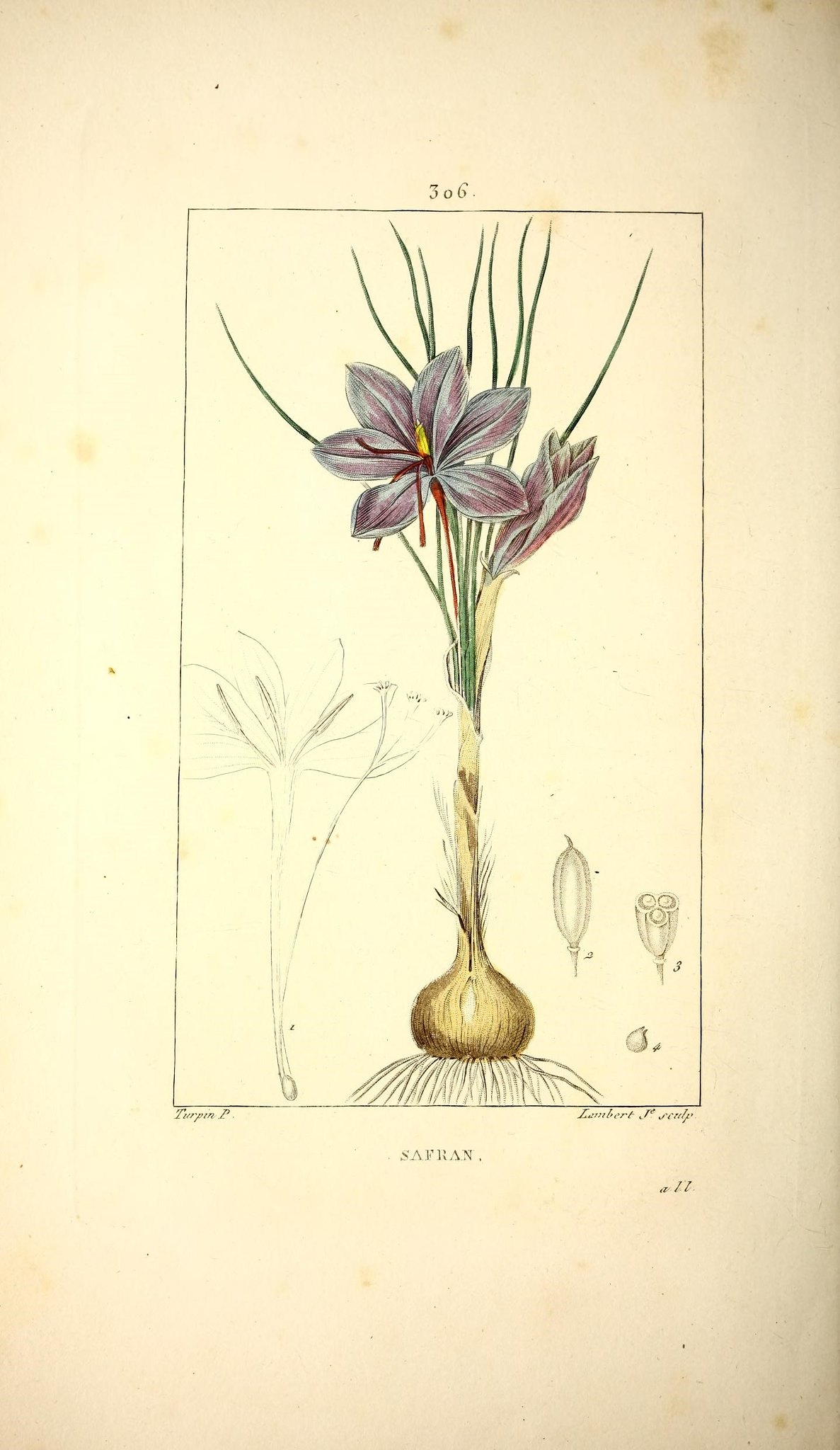
Saffron is the dried stigma of the autumn-blooming crocus and one of the most prized spices on earth. In a bar setting, you’ll usually encounter it as a flavoring and coloring agent for syrups, tinctures, and infusions. A few threads steeped in warm water, alcohol, or simple syrup release a golden hue and a complex aroma that reads as honeyed, hay-like, slightly leathery, and faintly metallic. In cocktails, saffron pairs well with citrus, stone fruit, honey, and botanicals like cardamom or rose. Bartenders sometimes use saffron syrup in sparkling aperitifs, saffron tincture in bitters formulas, or saffron-infused spirits to bring subtle luxury to stirred drinks.
Outside the bar, saffron remains central to traditional cuisines across the Mediterranean, Middle East, and South Asia. You’ll see it coloring rice dishes like paella and biryani, perfuming sweets, and enriching broths. Herbal traditions have long used saffron in small doses as a warming and uplifting botanical, particularly valued for its mood-brightening and circulatory effects. Even today, it occasionally appears in modern herbal liqueurs or aperitifs that aim for both aromatic complexity and gentle digestive support.
Plant Life Cycle
Hardiness Zone
Used in Spirits
Precautions
Saffron is generally safe when consumed in culinary quantities. However, large medicinal doses may cause nausea, dizziness, or uterine stimulation. Because of this emmenagogue activity, concentrated saffron preparations are traditionally avoided during pregnancy.
Extremely high doses can be toxic, though the amounts used in cooking and beverage preparation are far below those thresholds. As with many potent botanicals, moderation matters. A few threads deliver more than enough flavor.
Substitutions
When saffron is unavailable or prohibitively expensive, cooks and beverage makers sometimes turn to safflower (Carthamus tinctorius), often called “bastard saffron.” It contributes color but lacks saffron’s distinctive aroma. Turmeric can also provide a similar golden hue, though its earthy bitterness is noticeably different. Annatto seeds are another coloring alternative used in some culinary applications.
For aromatic purposes in beverages, a blend of honey, chamomile, and a small amount of hay-like herbs such as dried calendula or marigold can approximate the warm floral quality saffron contributes. None of these substitutes truly replicate saffron’s flavor, so they work best when color is the primary goal.
History
Origins
Saffron’s history stretches back more than three millennia and spans several civilizations. The plant is believed to have originated in the eastern Mediterranean or Southwest Asia and was already cultivated by the time of ancient Mesopotamia. It appears in early Assyrian botanical texts and was widely traded across Persia, Greece, and later the Roman Empire. Because each flower yields only three delicate stigmas that must be harvested by hand, saffron quickly became one of the world’s most valuable spices.
Throughout antiquity and the Middle Ages, saffron served not only as a culinary ingredient but also as a dye, perfume component, and medicinal herb. Greek physicians including Hippocrates reportedly used it for digestive and mood-related conditions, while medieval European herbalists recommended it for circulation and melancholy. By the late Middle Ages, saffron cultivation had spread across parts of Europe, including Spain and England, where the town of Saffron Walden famously took its name from the crop.¹²
Footnotes
-
Grigg, David. “The Agricultural History of Saffron.” Agricultural History Review, vol. 46, no. 2, 1998, pp. 143–154.
-
Basker, D., and F. Negbi. “Uses of Saffron.” Economic Botany, vol. 37, no. 2, 1983, pp. 228–236.
-
Srivastava, Rajesh, et al. “Saffron (Crocus sativus L.): A Comprehensive Review.” Pharmacognosy Reviews, vol. 4, no. 8, 2010, pp. 200–208.
The Essential Saffron Companion by John Humphries, Grub Street Publishing, 1996
Photo by: fotopedia