
Taste
Plant Parts Used
Therapeutic Properties
Purgative, Alterative, Anti-inflammatory, Bitter Tonic, Emmenagogue, Laxative, Rejuvenative & Vulnerary
Ayurvedic Character
Cooling
Current Uses
Botanical Family: Asphodelaceae
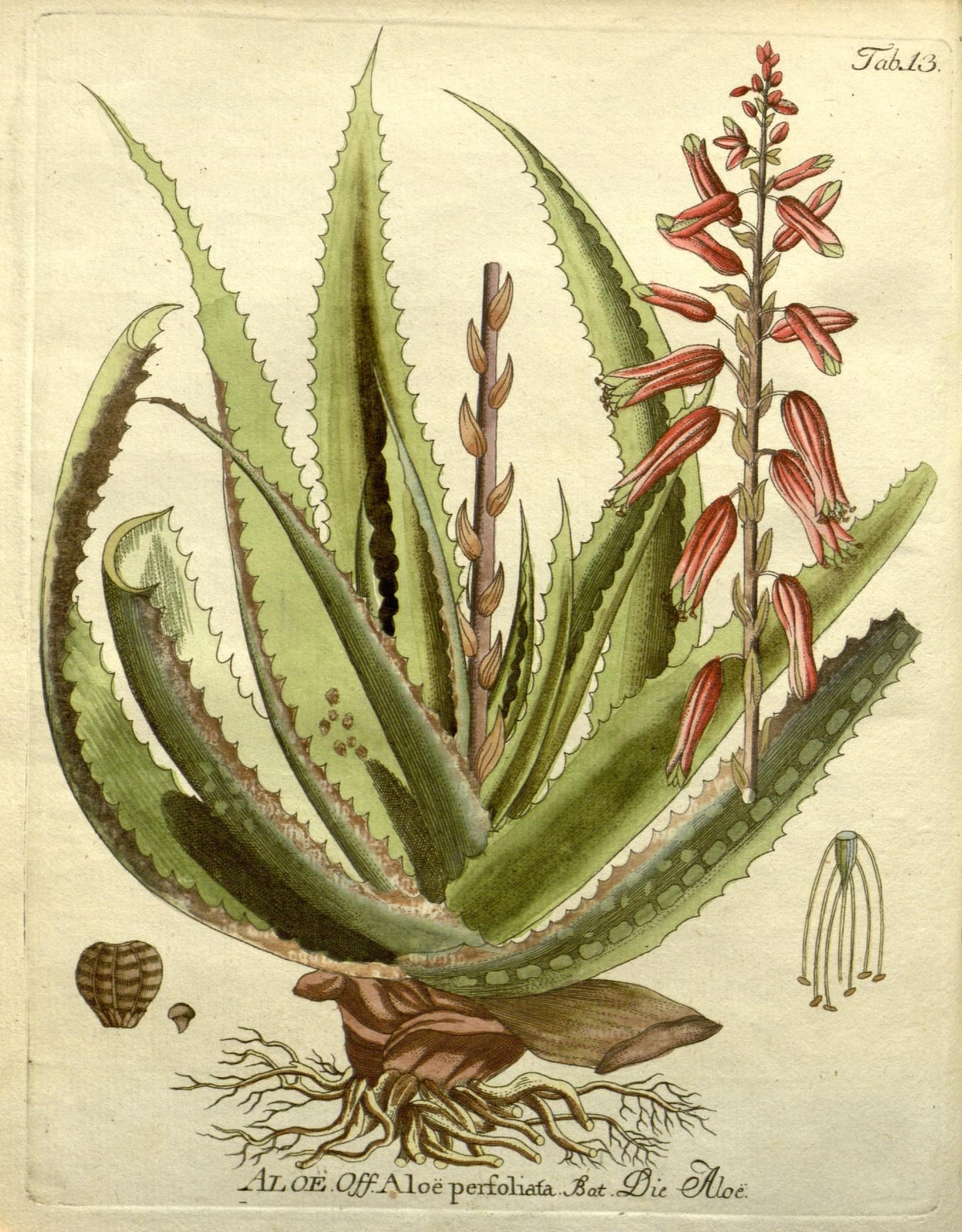
When you think of aloe, you probably picture the soothing gel people smear on sunburns—and you’d be right. Aloe vera, the best-known of the hundreds of aloe species, has earned that reputation thanks to the cooling, slimy gel inside its leaves. That gel’s been used for centuries in cosmetics and as quick first aid for burns, where its relief is nearly instant. The gel is also taken internally to relieve constipation and inflammation, but caution is urged due to its laxative effects. It has a grassy, pleasantly bitter taste and soft, crunchy texture.
But aloe has another side to consider: the bitter yellow-green latex just beneath the leaf skin. That liquid has a grassy, pleasantly bitter taste that’s found its way into countless liqueurs. Traditionally, it’s been taken internally for constipation and inflammation—though don’t overdo it, because aloe’s laxative kick is no joke (see Precautions below).
Aloe has been a healing mainstay in Ayurveda and Traditional Chinese Medicine for centuries. And while Aloe vera is the star, other species like Aloe ferox and Aloe arborescens also find their way into medicinal and beverage traditions.
Plant Life Cycle
Hardiness Zone
Used in Spirits
Precautions
The yellowish-green latex contains anthraquinones, most notably barbaloin and emodin, which give Aloe its purgative and laxative effects. Aloe should always be consumed with caution and only in small, recommended quantities. It is recommended that pregnant and nursing mothers avoid consuming Aloe.
Substitutions
While unequaled in its unique composition, some substitutions for Aloe vera include cucumber, chamomile, and calendula for cooling, soothing properties without the bitterness. Other varieties of Aloe include Aloe ferox and Aloe perryi, which are more difficult to source, but could be ideal substitutes. Like Aloe vera, precautions should be observed in particular with internal consumption.
History
Origins
Aloe vera is mentioned in the Papyrus Ebers circa 1550 BC and was prized by the ancient Egyptians as the “Plant of Immortality.” Historical legend purports that Alexander the Great sent his army from Greece to obtain the plant from Socotra, an island off the coast of Yemen.