
Taste
Plant Parts Used
Therapeutic Properties
Ayurvedic Character
Cooling
Current Uses
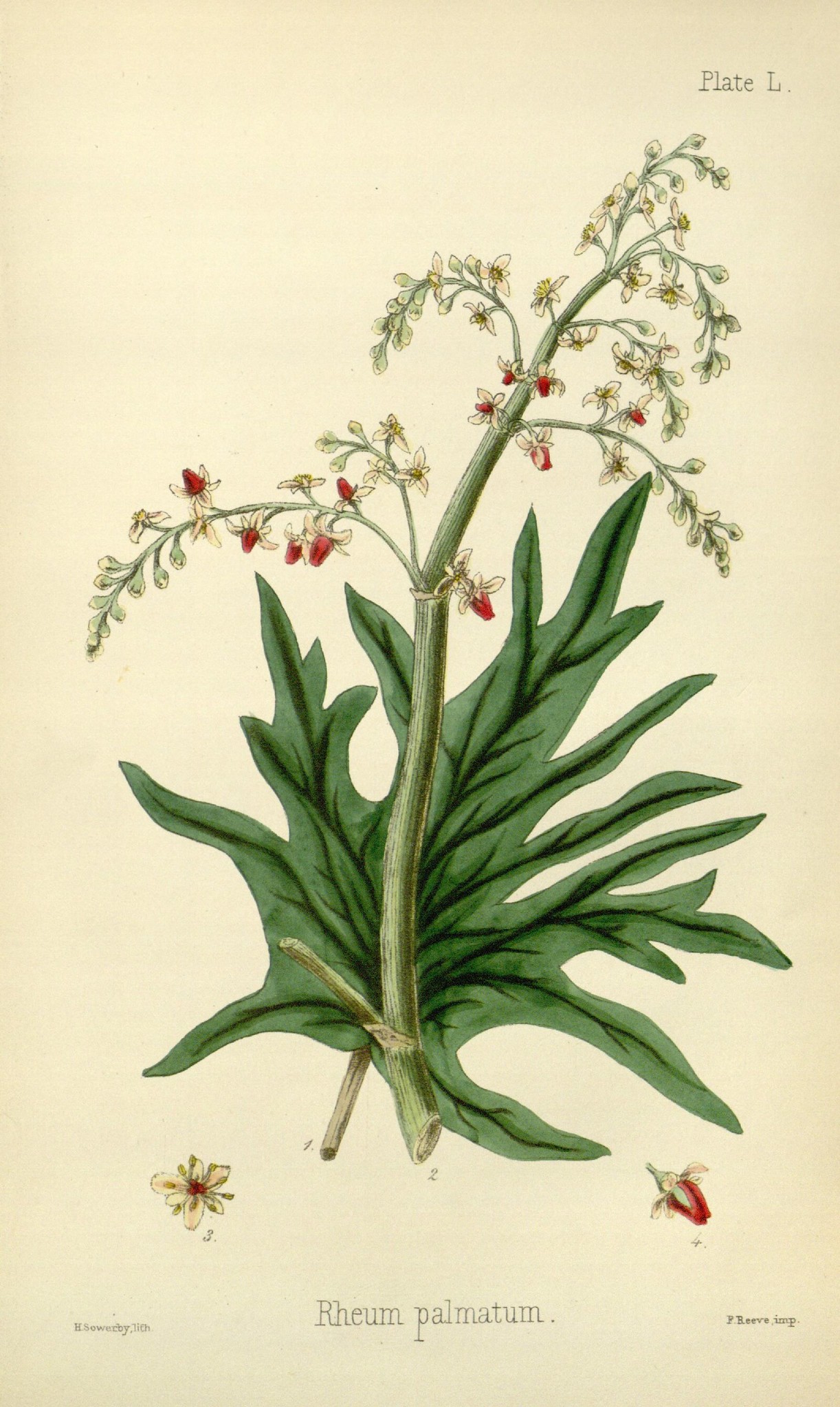
Turkey rhubarb is one of the classic bitter roots that gives traditional amari and bitters their backbone. If you’re working behind the bar or experimenting with botanical spirits, you’ll encounter it as a powerful structural ingredient rather than a dominant flavor. The dried root delivers a dry, tannic bitterness with earthy and slightly sour undertones that help anchor sweeter botanicals like orange peel, vanilla, or licorice. In practice, a small quantity can add depth and length to a bitter blend, reinforcing the lingering finish that drinkers expect from digestivi.
You’ll most often see turkey rhubarb used in traditional-style amaros, aperitif bitters, and old apothecary-style tinctures. Its role is partly flavor and partly function. Historically, rhubarb root has been associated with digestive tonics, so it became a natural fit in European bitter liqueurs designed to be sipped after a heavy meal. Modern bartenders occasionally infuse it into house bitters or herbal liqueurs, though it is typically used sparingly because its bitterness can dominate a formula if overused.
Precautions
Turkey rhubarb root contains anthraquinone compounds that stimulate intestinal movement. In traditional herbal medicine, these compounds are responsible for its laxative effects when taken in larger quantities. Because of this, concentrated extracts or large doses should be used cautiously.
The root should generally be avoided during pregnancy and while breastfeeding due to its stimulating effects on the digestive tract. Long-term internal use is also discouraged in herbal practice because anthraquinone-containing herbs may irritate the intestines with repeated use.
As with most strongly bitter botanicals, the quantities used in bitters and liqueurs are typically very small and primarily flavor-driven rather than medicinal.
Substitutions
The more popular and related rhubarb that is grown for its rhizome as a garden vegetable is not a substitute as it does not have the same medicinal value.
If turkey rhubarb root is unavailable, a few other bitter botanicals can fill a similar structural role in a bittering formula.
Gentian root is the closest functional substitute. It delivers a strong, clean bitterness and is widely used in both aperitif and digestif spirits.
Quassia wood provides an intense bitterness with less earthy complexity, so it can replicate rhubarb’s bitterness but not its tannic nuance.
Dandelion root offers a milder bitterness and roasted, earthy character. It works well when you want rhubarb’s digestive association but in a softer form.
Yellow dock root can provide a somewhat similar earthy bitterness and has a long history in traditional herbal medicine.
History
Turkey rhubarb has one of the longest documented trade histories of any medicinal plant. The root comes from species of Rheum native to western China and Tibet, where it was valued in early Chinese medicine for digestive and purgative effects. From there, it traveled west along early Silk Road trade routes and became one of the most prized medicinal imports into the Middle East and Europe. By the medieval period, rhubarb root was often more valuable than cinnamon or opium in European markets because of its rarity and perceived medicinal potency.
The name “Turkey rhubarb” does not reflect its botanical origin but rather its trade route. European merchants encountered the root through Ottoman trade networks, especially through ports in what is now Turkey. Apothecaries across Renaissance Europe stocked the dried root as a purgative and digestive remedy, and it remained a staple of European pharmacopeias for centuries. As herbal medicines evolved into early liqueurs and digestifs, rhubarb root naturally found its way into bitter tonics and medicinal cordials, helping shape the tradition that later became modern amaro.
Footnotes
-
Bensky, Dan, Steven Clavey, and Erich Stöger. Chinese Herbal Medicine: Materia Medica. 3rd ed., Eastland Press, 2004.
-
Grieve, M. A Modern Herbal. Dover Publications, 1971.
-
Unschuld, Paul U. Medicine in China: A History of Pharmaceutics. University of California Press, 1986.