
Taste
Plant Parts Used
Therapeutic Properties
Aromatic, Antimicrobial, Anti-inflammatory, Antispasmodic, Astringent, Bitter Tonic, Carminative, Diaphoretic, Emmenagogue, Febrifuge, Hemostatic & Vulnerary
Ayurvedic Character
Cooling
Current Uses
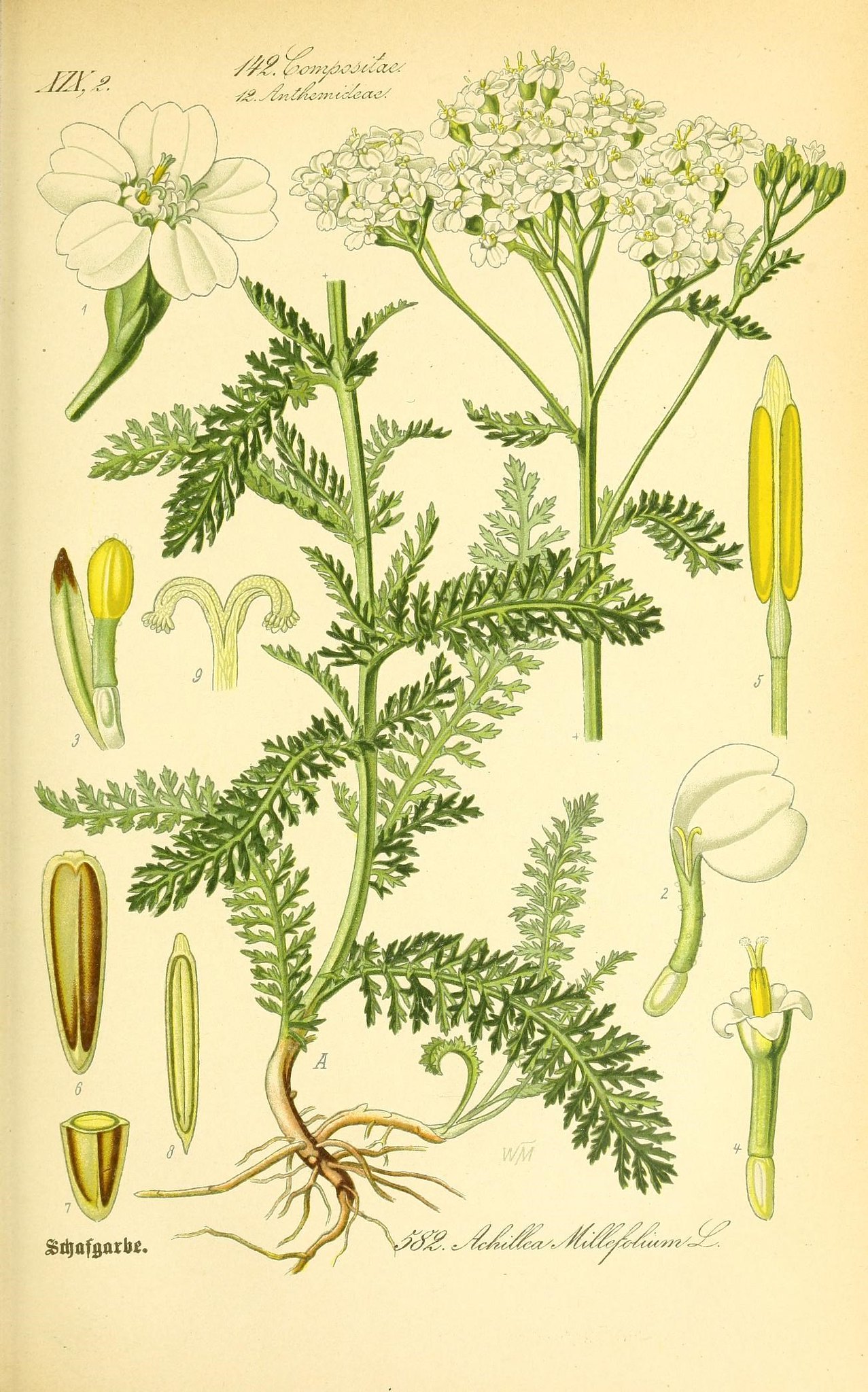
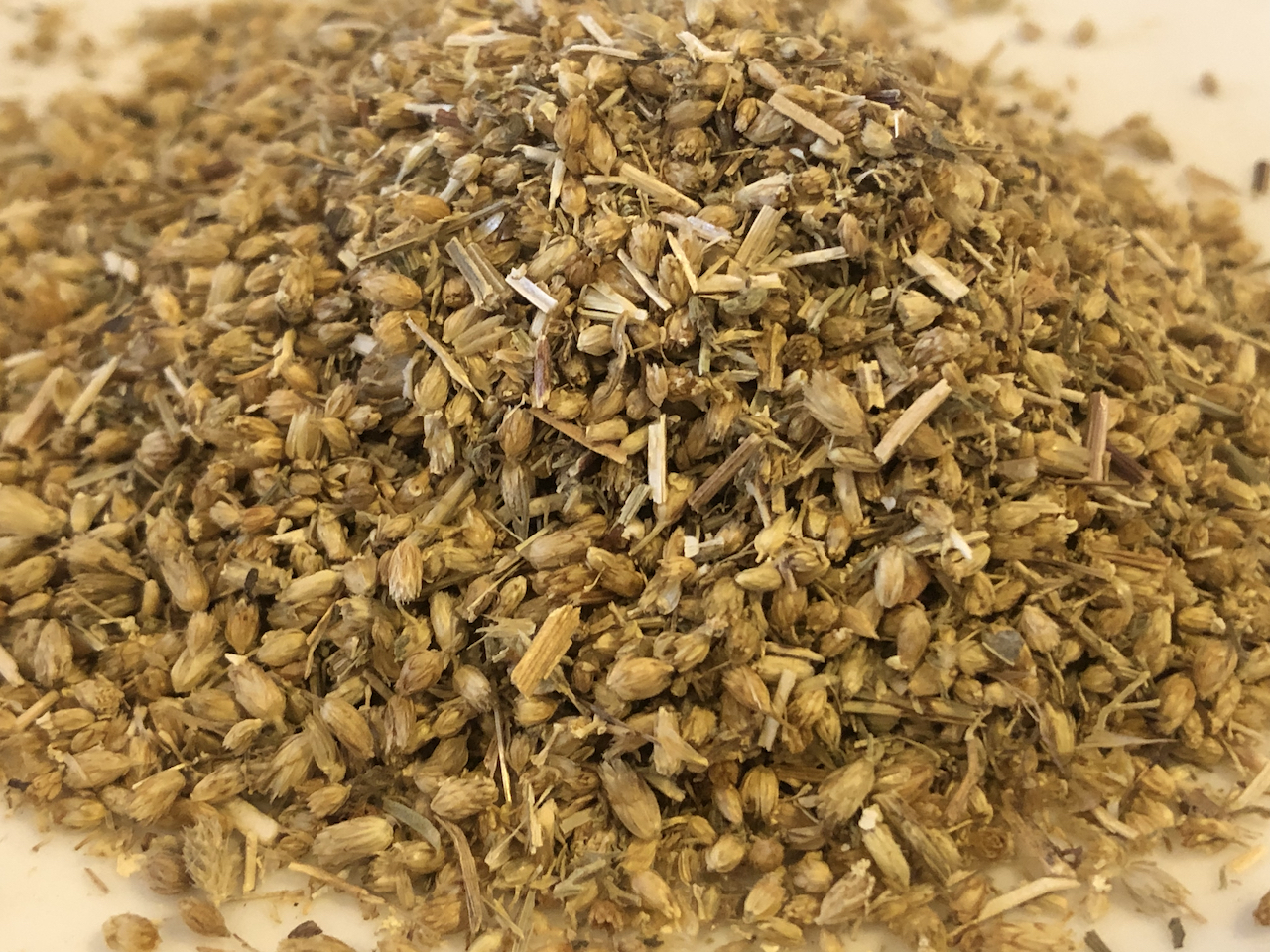
If you’re looking to harvest yarrow, you’re more likely to find it used as a bushy ornamental in landscaping than you are growing wild in a field, at least in the U.S. When harvested, typically only the flowering tops are used. There are white and yellow varieties: white is traditionally the more medicinal.
Yarrow is used mostly behind the scenes as an ingredient in the usual bitter suspects: amari, bitters, and vermouth. It’s bitter profile adds to the complexity you’ll taste in these botanical products.
If you spend enough time digging through old European bitter formulas, you’ll eventually run into yarrow. The plant carries a penetrating herbal bitterness with a lightly camphorous, almost sage-like aroma. Distillers and liqueur makers use the flowering tops and leaves to build structure in herbal spirits, especially when a recipe needs a firm bitter backbone that isn’t as heavy as gentian. In modern craft distilling, yarrow shows up in alpine-style amari, Scandinavian aquavits, herbal bitters, and occasionally botanical gins where a dry meadow-like herbal note is desired.
Behind the bar, you’ll mostly encounter yarrow through bitters and herbal liqueurs, but it can also be infused directly into high-proof spirits for house bitters or tinctures. The plant extracts quickly, producing a sharp bitterness balanced by aromatic green notes that resemble chamomile, sage, and wildflowers. Used sparingly, it adds depth and dryness to cocktails that lean sweet, particularly drinks built on honey, stone fruit, or citrus.
Precautions
Yarrow belongs to the Asteraceae family and may trigger allergic reactions in individuals sensitive to ragweed or related plants.
The plant contains compounds such as thujone and other volatile constituents that can become concentrated in extracts. While the levels used in beverages are typically small, excessive medicinal consumption is discouraged.
Traditional herbal literature also advises avoiding yarrow during pregnancy due to its historical classification as an emmenagogue.
Substitutions
If yarrow is unavailable, several botanicals can approximate portions of its flavor profile depending on the role it plays in a formula.
Wormwood can replace the bitter backbone but will produce a far stronger bitterness and a more medicinal profile.
Chamomile can replicate some of the floral and meadow-like aromatics, though it lacks the bitterness.
Sage can mimic the herbaceous, camphorous aroma but contributes almost no bitterness.
A blend of chamomile and gentian is often the closest functional substitute in bitters formulas, providing both floral lift and bitterness.
History
Origins
Yarrow has one of the longest medicinal histories of any European herb. The plant’s botanical name refers to the mythic Greek hero Achilles, who according to ancient accounts used the plant to treat soldiers’ wounds during the Trojan War. Classical physicians including Hippocrates and later Dioscorides recorded the herb’s use for staunching bleeding and promoting wound healing. These applications earned yarrow folk names like “soldier’s woundwort” and “herbal militaris.”¹
By the medieval period the herb had moved from battlefield medicine into everyday household remedies across Europe. Monastic gardens cultivated it for digestive complaints, fever remedies, and tonic preparations. In northern Europe it also entered brewing traditions before hops became dominant. Early ales and gruit beers frequently contained yarrow for both bitterness and preservation, establishing the plant as one of the original bittering herbs in alcoholic beverages.²
Footnotes
-
De Materia Medica. Pedanius Dioscorides. Translated by Lily Y. Beck. Hildesheim: Olms-Weidmann, 2005.
-
Medical Botany: Plants Affecting Human Health. Walter H. Lewis and Memory P. F. Elvin-Lewis. Hoboken: Wiley, 2003.