
Taste
Plant Parts Used
Therapeutic Properties
Cholagogue, Antioxidant, Antimicrobial, Carminative, Diaphoretic, Digestive, Emmenagogue, Nervine & Stimulant
Ayurvedic Character
Heating
Current Uses
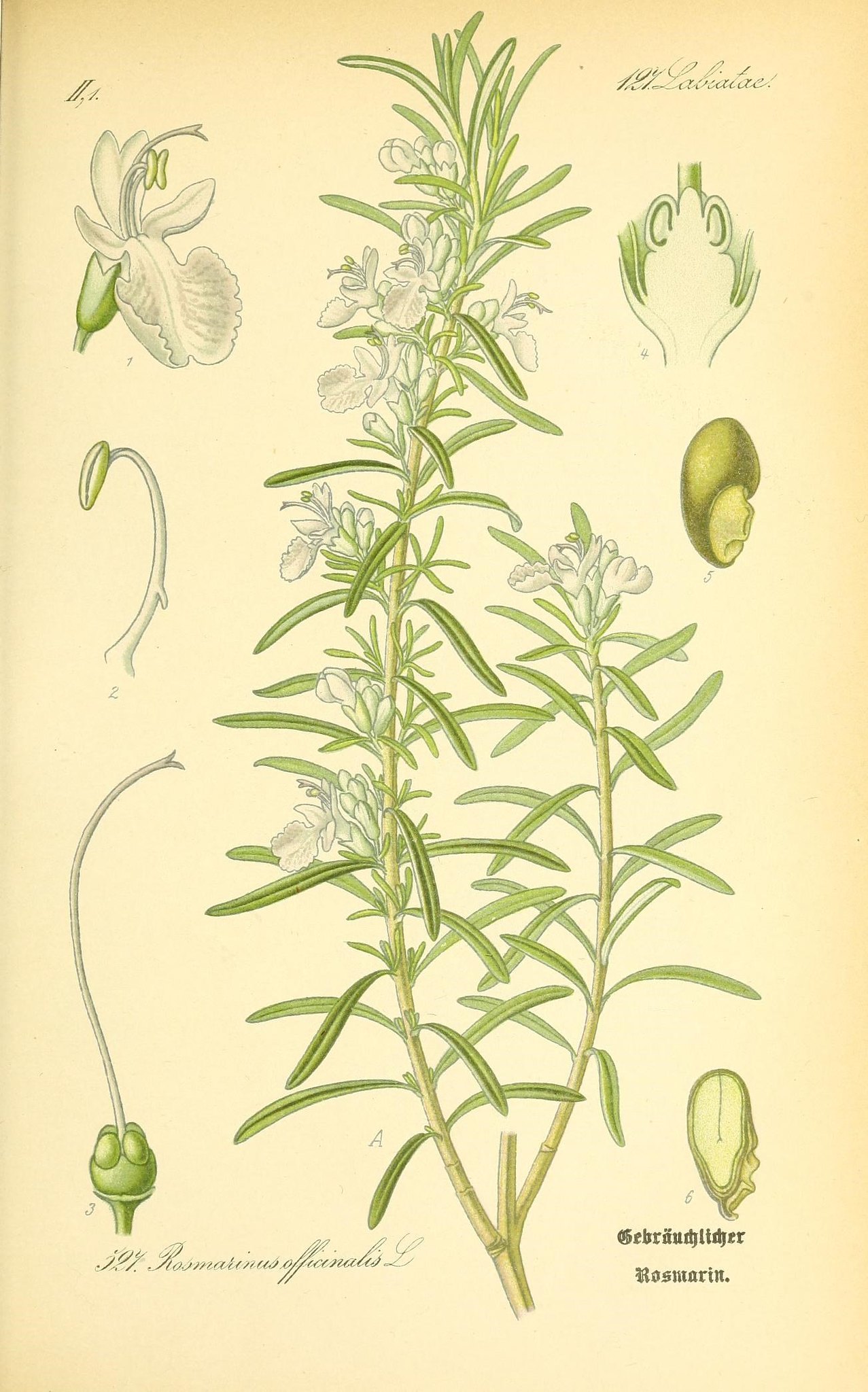
If you’ve spent any time behind a bar or in a kitchen, you already know rosemary as one of the most aromatic herbs around. Today it shows up in everything from roasted meats to infused syrups, but bartenders have been leaning into its bold resinous character more and more. You’ll see it muddled into citrus-forward cocktails, steeped into honey or simple syrup, smoked for garnish, or infused directly into spirits like gin and vodka. A small amount goes a long way; rosemary’s piney intensity can anchor a drink the same way a bittering agent might, adding structure and a savory edge that balances sweetness.
In herbal traditions, rosemary is also widely used in teas, tinctures, and topical preparations. Herbalists often turn to it as a warming, stimulating herb that supports digestion and circulation while sharpening mental clarity. Because of its aromatic oils, rosemary is frequently used in bitters formulas, digestive liqueurs, and botanical spirits where its flavor bridges the gap between culinary herbs and classic bittering botanicals.
Precautions
Rosemary is generally considered safe in culinary and beverage quantities. Concentrated extracts or essential oils should be used cautiously, as high doses may irritate the gastrointestinal tract or nervous system.
Because rosemary can stimulate uterine activity, large medicinal doses are traditionally avoided during pregnancy. Individuals with seizure disorders are sometimes advised to avoid concentrated rosemary preparations due to the stimulating effects of certain volatile compounds.
Substitutions
If you need something to stand in for rosemary in a beverage or herbal preparation, a few herbs come close in character.
Thyme works well when you want a similarly woody Mediterranean profile but with a softer edge.
Sage can substitute when you want a deeper, savory herbal backbone in cocktails or syrups.
Bay leaf offers a comparable resinous quality, especially in long infusions.
Lavender can replace rosemary in aromatic applications where floral notes are acceptable, though it is noticeably sweeter.
Juniper complements the same flavor space and can sometimes substitute when rosemary’s pine-like quality is the main goal.
History
Origins
Rosemary has been intertwined with Mediterranean life for thousands of years. Native to coastal regions of southern Europe, it was widely used by the ancient Greeks and Romans as both a culinary herb and a symbol of memory and fidelity. Students in ancient Greece reportedly wore garlands of rosemary while studying because the herb was believed to strengthen memory and mental clarity.¹
Throughout medieval Europe, rosemary developed a reputation as a protective and purifying plant. It was burned in homes to cleanse the air and was often included in early medicinal wines and herbal distillations. By the Renaissance, rosemary had become a staple in apothecaries and kitchens alike, appearing in medicinal tonics, bathing preparations, and spirit infusions. One famous preparation, Hungary Water, a rosemary-based alcohol distillate dating to the 14th century, became one of Europe’s earliest alcohol-based perfumes and medicinal spirits.²
Footnotes
-
Grieve, Maud. A Modern Herbal. London: Jonathan Cape, 1931.
-
McGee, Harold. On Food and Cooking: The Science and Lore of the Kitchen. New York: Scribner, 2004.
-
Bone, Kerry, and Simon Mills. Principles and Practice of Phytotherapy: Modern Herbal Medicine. 2nd ed. Edinburgh: Churchill Livingstone, 2013.
Photo by: flickr